


The Most Common Mistakes Families Make with Reactive Dogs (and How to Avoid Them)

Having a reactive dog can be exhausting: pulling, barking, tension on walks, fear of crossing paths with other dogs or people… But what many families don't know is that, unintentionally, they reinforce the reactivity with small, day-to-day mistakes.
In this blog, we tell you what the most common mistakes are and how to avoid them to truly help your dog improve their behavior.

1. Trying to Avoid All Stimuli
Many families, out of fear that the dog will react, start avoiding:
Other dogs
Crowded walks
Areas with stimuli
Social encounters
This seems like the solution… but in reality, it worsens reactivity because it:
Increases fear
Keeps the dog without real practice
Limits their ability to improve
Reinforces avoidance
Dogs need exposure, but done correctly, with structure and a balanced pack.
2. Approaching the Frightening Stimulus Too Quickly
This is one of the most serious mistakes:
❌ Seeing a dog
❌ Forcing the approach
❌ "Come on, it's okay"
❌ Putting them face-to-face to sniff
This causes the dog to:
Block up
Bark
Lose emotional control
Lose trust in you
Reinforce reactivity
Exposure must be gradual, not abrupt.
3. Trying to Calm Them by Petting During an Outburst
If the dog is:
Barking
Pulling
Tense
In "red alert" mode
and you pet or hug them… you are unintentionally saying: 👉 "Good job, keep it up."
It is not the family's fault; it's human instinct. But for a dog, petting is reinforcement.
4. Scolding Them for Growling
This mistake is very common:
❌ "Don't growl"
❌ "Quiet"
❌ "Stay still"
But growling is COMMUNICATION. It is their way of saying: 👉 "I am uncomfortable" 👉 "I need space"
If growling is punished:
The dog stops giving warnings
It goes directly to more intense reactions
The risk of conflict increases
Growls are understood, not punished.
5. Taking Them to Dog Parks ("Pipicanes") Full of Unstable Dogs
Dog parks are chaos:
Dogs without socialization
Extremely high energy
Poorly introduced dogs
Distracted owners
Reduced space
Conflicting dynamics
A reactive dog there:
❌ Feels pressure
❌ Has no escape
❌ Gets overstimulated
❌ Becomes dysregulated
❌ Worsens every day
The ideal is to work with balanced groups, NOT random ones.
6. Thinking That "Playing with Dogs" is Socializing
Many reactive dogs:
Don't know how to play
Don't know how to regulate themselves
Don't know how to read signals
Don't know how to stop
And their families believe that "the more they play, the better."
But a reactive dog needs:
🟩 Structure
🟩 Clear boundaries
🟩 To learn self-control
🟩 To live alongside stable dogs
🟩 Real opportunities for calm
Not chaotic play.
7. Training Only with Food, Without Working on Emotions
Treats help… but they DO NOT solve reactivity on their own.
If only food is used:
The dog learns exercises
But does not learn emotional regulation
Or social reading
Or security
Or calmness
Reactivity is worked on through:
🟩 Cohabitation
🟩 Self-control
🟩 Emotional management
🟩 A balanced pack
🟩 Clear structure
Not just through "tricks."
8. Not Understanding the Importance of Human Energy
If you are:
Tense
Nervous
Anticipating the problem
Afraid they will react
your dog picks up on it and thinks: 👉 "If you are nervous, I have to protect us."
The reactive dog needs to see that their guide is:
🟩 Calm
🟩 Firm
🟩 Secure
🟩 Consistent
That is why at La Finquilla, we also train the families.
9. Trying to Solve It Without Professional Help
Many problems are aggravated because families:
Try a thousand things
Watch videos out of context
Mix methods
Improvise
Or get discouraged
Reactivity is a profound issue. It requires:
✔ Reading body language
✔ Environmental management
✔ Correct introductions
✔ Proper distances
✔ Balanced dogs
✔ Technique
✔ Experience
It cannot be improvised.
10. Not Having a Stable Pack to Work With
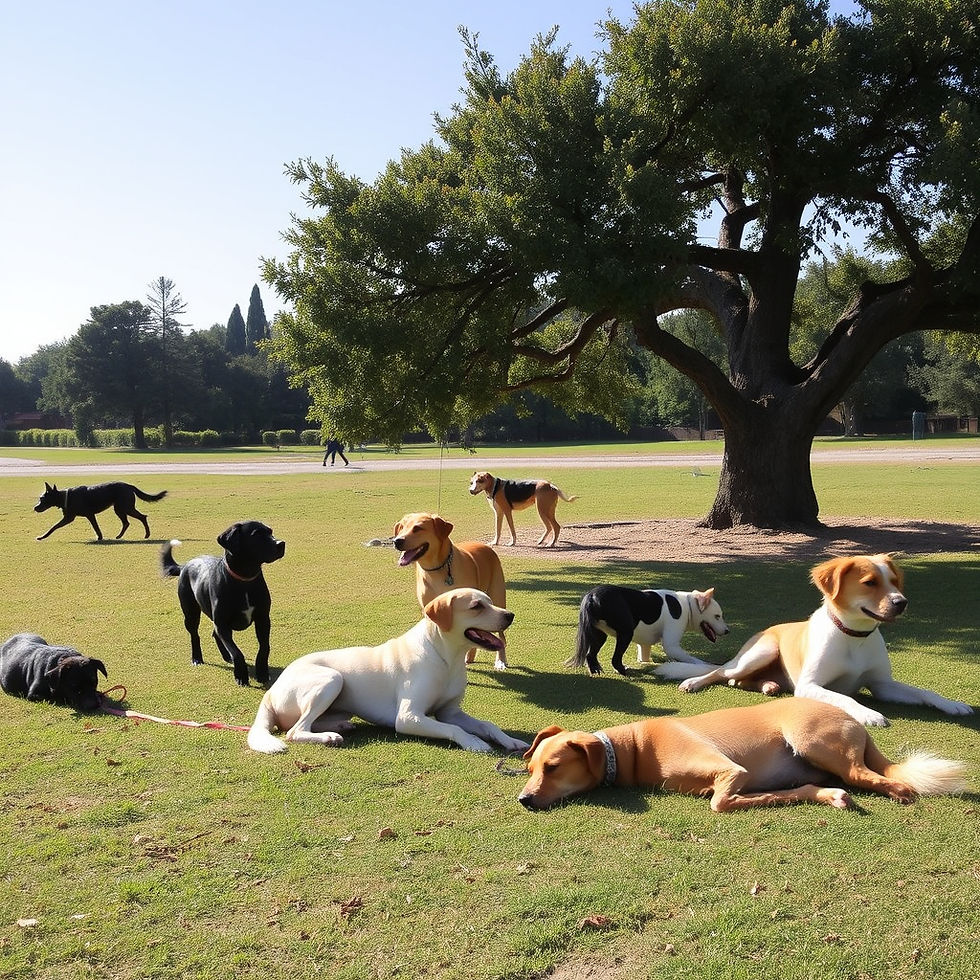
This is the key to success at La Finquilla: Dogs learn from other dogs.
A balanced pack teaches:
Calmness
Boundaries
Respect
Communication
How to live together
How to manage emotions
There is nothing more natural or more effective. This is our method, and it always works because:
👉 We DO NOT force
👉 We DO NOT confront
👉 We DO NOT punish
👉 We DO NOT overexpose
👉 We DO teach real cohabitation
Conclusion
Reactive dogs are not "bad" dogs. They are dogs that don't know how to do better. With structure, a balanced pack, professionalism, and calmness, the changes can be spectacular... and long-lasting. We see it every day at La Finquilla.
Does your dog show reactivity or insecurity?
We can help you with a real plan based on cohabitation, calmness, and a balanced pack.


Comments