


Aggressive Dogs and Bite Sports: Is IGP Really the Solution?

Working dog sports such as IGP (formerly Schutzhund) have gained massive popularity internationally. More and more dogs with aggression, impulsivity, and uncontrolled biting are being directed into bite sports under the belief that structured obedience and controlled biting will “fix” the problem.
But the key question remains:
👉 Is this true emotional rehabilitation, or simply behavioural control under pressure?

Control and Obedience Are Not the Same as Emotional Stability
A common justification for using IGP with aggressive or reactive dogs is that:
• “They learn bite control”
• “Their obedience becomes perfect”
• “They perform flawlessly on the training field”
And often, this is true within the sport environment.
However:
• The dog complies because it is highly conditioned
• Behaviour is maintained through constant structure and pressure
• Control exists only where expectations are predictable
This is not emotional stability.
This is behavioural suppression.
A Truly Balanced Dog Self-Regulates Without Commands
A socially stable dog:
• Regulates itself without needing constant cues
• Handles frustration calmly
• Reads and responds to canine social signals
• Adapts to real-life environments without conflict
Many dogs that appear “stable” in bite sports:
• Are only regulated within training rituals
• Struggle when removed from the sport context
• Carry unresolved emotional instability into daily life
Obedience does not resolve emotional issues — it masks them.
Why Behaviour Does Not Automatically Generalise
One of the biggest misconceptions in dog training is believing that technical skills will transfer seamlessly into everyday life.
A dog may:
• Bite only on command
• Release cleanly
• Perform precision obedience
And still:
• Show social instability
• React poorly to unfamiliar dogs or environments
• Lack emotional resilience
Because emotional regulation is learned through life experience, not repetitive technical drills.
Uncontrolled Biting Is an Emotional Problem, Not a Sporting One
When a dog:
• Becomes over-aroused easily
• Displays poor impulse control
• Has low frustration tolerance
• Uses biting as an emotional outlet
👉 The solution is not more stimulation.
What the dog actually needs is:
• Nervous system regulation
• Stress reduction
• Safe social learning
• Non-competitive interaction
High-arousal bite sports often reinforce the very emotional states these dogs struggle with.
Functional Performance vs Emotional Balance
This is where confusion often arises.
A functional dog:
• Is predictable under strict rules
• Performs reliably in structured environments
• Excels at specific tasks
A balanced dog:
• Is emotionally flexible
• Socially competent
• Calm in everyday situations
• Stable without constant supervision
A dog can perform at a high level in IGP and still lack emotional balance.

The Risk of Normalising “Controlled” Aggression
Saying an aggressive dog is “fine” because its aggression is channelled into sport is risky if:
• The underlying emotional drivers remain unaddressed
• Social competence has not improved
• Frustration tolerance has not increased
Aggression does not disappear because it has structure.
It simply becomes organised.
And organised aggression is not healed aggression.
Why Real-Life Social Environments Matter
True emotional balance becomes visible outside training fields:
• In shared spaces
• In daily routines
• In natural dog-to-dog interactions
• In moments without commands or equipment
Dogs do not learn emotional stability in isolation.
They learn it through lived experience.
Our Philosophy at La Finquilla
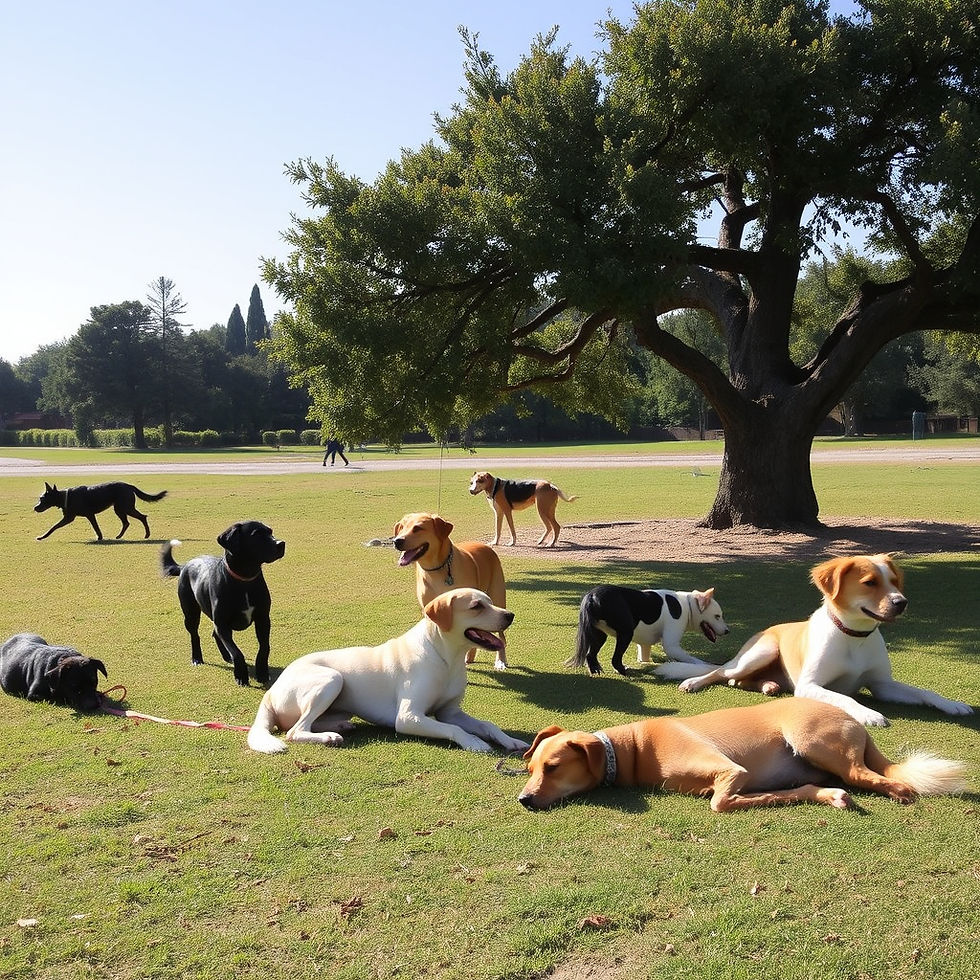
At La Finquilla, we work with dogs in real-life, social environments:
• Stable mixed-dog groups
• Controlled yet natural social interaction
• Cage-free living
• Daily routines that promote regulation
• Emotional work before technical performance
We believe:
• Obedience without emotional balance is fragile
• Sport cannot replace emotional rehabilitation
• True stability requires no constant control
Conclusion
👉 Dogs with aggression and uncontrolled biting are not suitable for bite sports unless deep emotional and social regulation work is done first.
Because:
• Control is not balance
• Obedience is not emotional health
• Sport is not therapy
The goal is not a dog that performs under pressure —
but a dog that can live calmly and safely in the real world.


Comments